


For Aubrie, activism has become both a guiding focus and an evolving practice. As a Trinity Fellow in Marquette University’s graduate program, she is studying Education Policy and Leadership while working at Community Advocates gaining hands-on experience in community-based work.
The Trinity Fellows Program brings together twelve graduate students across disciplines, each grounded in a shared commitment to social and economic justice. The program fully funds tuition while placing fellows in nonprofit organizations for two years, allowing them to explore what activism looks like in practice.
At Community Advocates and the Rental Housing Resource Center (RHRC), Aubrie has been exploring how these ideas translate into real-world impact. She sees the organization as one with both the tools and the responsibility to push beyond direct service. While funding structures can limit what's possible, she believes there's a need for advocacy at a systems level.
“How do we truly understand the people we’re workings with?” Aubrie asks. “How do we identify both needs and wants? How do we build something that reflects collective care?”
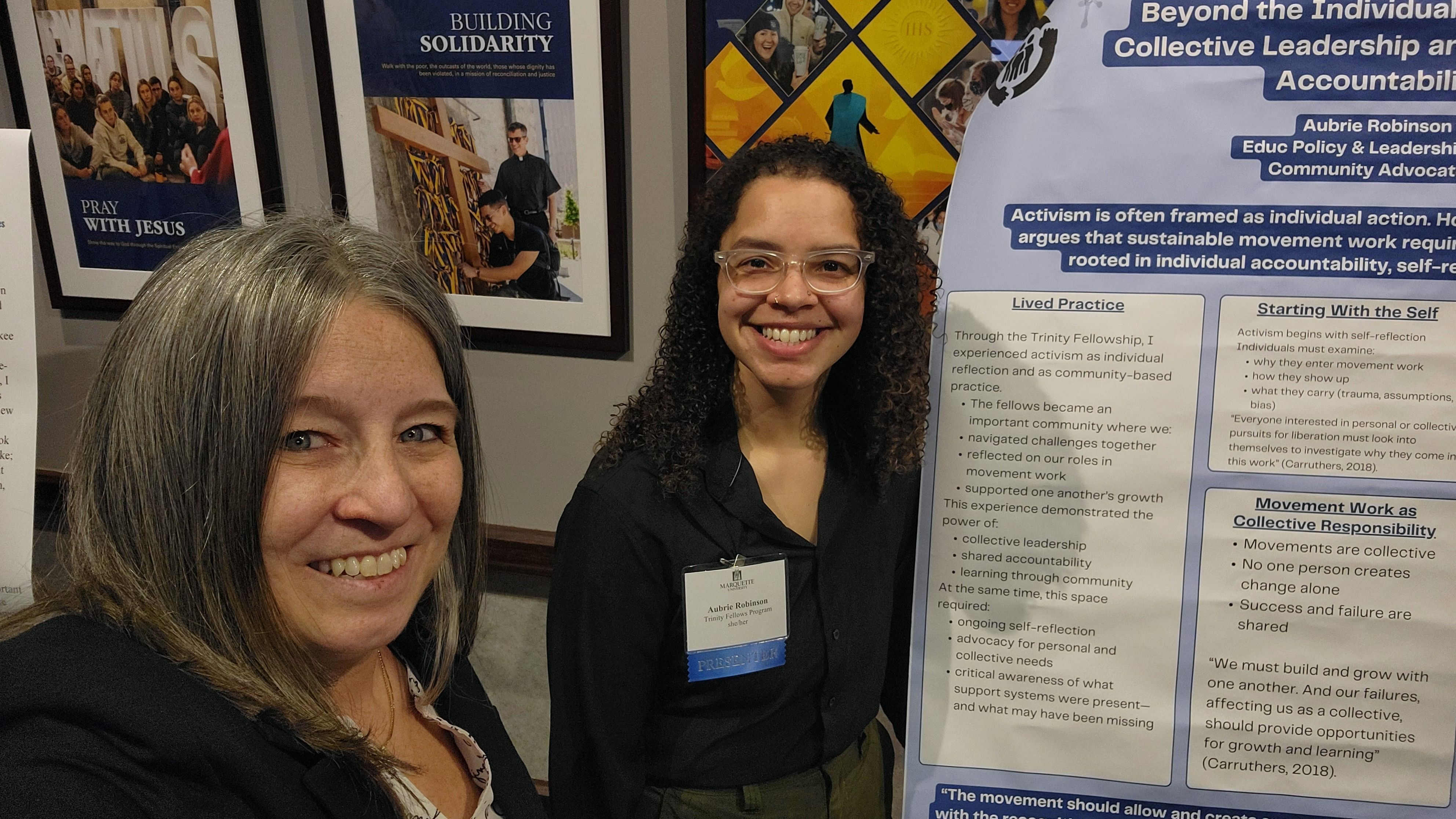
These questions came to life during her Community Impact Showcase presentation on March 27 at Marquette University, which highlighted students involved in several community engagement programs. Aubrie’s poster explored activism as something far bigger than individual action. Inspired by her coursework and the book Unapologetic by Charlene Carruthers, Aubrie created a project centered on sustainable activism—one that insists community work must also include internal work.
Aubrie emphasizes healing justice, accountability, and self-reflection as necessary components of collective change. “Sustainable activism begins with the individual,” she explains, “but it can’t stop there. It has to expand outward, rooting in community care and shared responsibility.”
Now in the second year of her fellowship, Aubrie is thinking about how to build unity across differences. She has seen how divisions, especially around identity, can take focus away from larger goals, and she’s interested in how communities can better support and engage with those differences instead of avoiding them.
“Division often comes from fear of difference,” she says. “But what would it look like to support and embrace those differences instead?”
This question doesn’t come with easy answers. Healing, she notes, is messy. It takes time and is something not everyone has equal access to. Many people face barriers like lack of resources, safe environments, community support, or time away from survival needs. It looks different for everyone. She believes it’s essential to ask: who gets to heal, and what does that healing require?
Before the fellowship, Aubrie saw activism as something largely external. Through her work at Community Advocates and the RHRC—engaging directly with community members and navigating the realities of service-based work—she began to see how personal experiences and systemic barriers are deeply connected. Now, she understands it as both personal and collective. It’s holding herself accountable, advocating for her own needs, and recognizing how those needs exist within a broader community context.
As she prepares to graduate in May, Aubrie is considering careers in education and policy. No matter the path, her goal is to help create systems that better support communities and build change that is both practical and sustainable.