


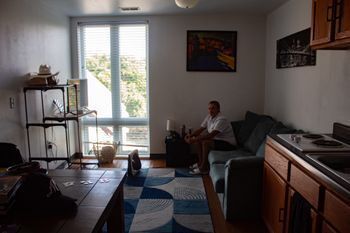
Nationally, adults aged 50+ are the fastest-growing age group among those experiencing homelessness. In Milwaukee, service providers such as Community Advocates and residents see this trend playing out every day in our community.
What's Causing This Trend?
A few major factors that are making it difficult for aging adults to find and maintain housing that meets their needs, both nationally and in Milwaukee County, include:
- Rising rents for housing of all kinds puts the squeeze on individuals and families.
- Older adults reliant on fixed incomes often struggle to cover basic living expenses, including housing.
- As the Baby Boomers age, there’s more demand for housing that meets the needs of older adults, and that type of housing isn’t always available or affordable for this growing demographic.
- Health issues that occur as we age—including cognitive issues, physical issues, and mental health challenges—make it difficult to maintain housing or live independently.
- Looking for housing or resources for older adults often requires technology, such as a smart phone or computer, that elders lack. Plus, checking out a place to rent can be difficult for elders with mobility or transportation issues.
What Community Advocates is Doing to Meet the Housing Needs of Aging Adults
Community Advocates has become more and more concerned about aging Milwaukee County residents’ growing needs for affordable and appropriate housing. In the past year, we’ve worked with partners to begin building a housing system in Milwaukee County that better serves aging adults. Here’s what we’re doing:
- Researching the Housing Needs of Aging Adults in Milwaukee County: In January 2025, Community Advocates launched a research initiative to learn more about aging adults who experience housing challenges. Thanks to a one-year seed grant funded by the Advancing a Healthier Wisconsin Endowment at the Medical College of Wisconsin, we engaged and surveyed these elders and community stakeholders to better understand their experiences. Plus, we offered recommendations to improve their experiences. Read the final report here.
- Convening Stakeholders: In October 2024, Community Advocates organized a symposium on aging adults and housing insecurity at Direct Supply. The panel discussion featured local housing and health experts and was attended by a diverse mix of professionals, advocates, and people with lived experience. You can read more about the symposium here.
- Participating in Milwaukee County’s Elder Justice Innovation Grant: In 2024, Milwaukee County Department of Health and Human Services was awarded federal funding to create a better process for elders who are in emergency shelter and need housing. Community Advocates is honored to be a referral partner in this initiative. Read more here.
Community Advocates' History of Serving Milwaukee County
Since our founding in 1976, Community Advocates has focused on meeting the basic needs of households that experience instability. Instability can be caused by housing that’s in poor condition, the lack of good quality affordable housing, a negligent property owner, the burden of having an eviction in your past, domestic violence or financial abuse, and the legacy of red-lining and segregation in Milwaukee County.
Over the years, Community Advocates’ mission has grown to include these programs and services:
- Emergency shelter for individuals and families who have experienced domestic violence or housing insecurity
- Eviction prevention and rental assistance
- Case management for housing insecure families with school-age kids
- Hosting the Milwaukee Rental Housing Resource Center in our downtown offices, 728 N. James Lovell St., Milwaukee
- Energy assistance
- Outreach and engagement with people experiencing street homelessness
- Supportive housing programs
- Membership in the Milwaukee Coalition on Housing and Homelessness
- Tenant-landlord training
- The Healthy Housing Initiative
You can learn more about our housing programs and services here: communityadvocates.net/what-we-do/need-help.html
Tenants and property owners needing help can visit the Milwaukee Rental Housing Resource Center, located within Community Advocates’ offices at 728 N. James Lovell St., Milwaukee, from 10 a.m. to 3 p.m., Monday through Friday, without an appointment. The RHRC team will assess your needs and make a referral to services that can help you out. Learn more about the RHRC at renthelpmke.org.